Government Benefits
Social Security Group 1 Direct Deposit: What It Means for Your Benefits

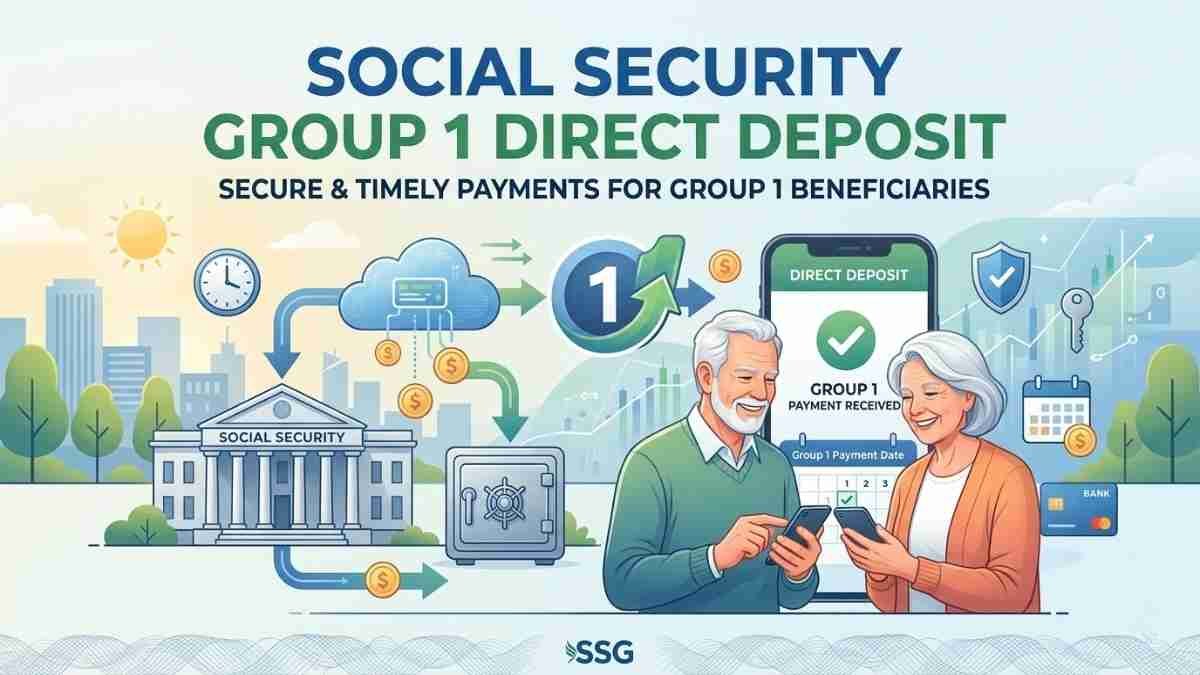
When you hear the term social security group 1 direct deposit, it might sound like a complicated government classification. In reality, it is simply a scheduling system that determines when your monthly benefits arrive in your bank account. Understanding this grouping can help you plan your finances with confidence and avoid the anxiety of wondering when your money will be available. For millions of Americans, Social Security benefits are a lifeline, and knowing the ins and outs of the payment schedule is an essential part of managing monthly budgets, paying bills on time, and maintaining peace of mind.
Understanding the Social Security Payment Schedule
The Social Security Administration (SSA) does not send all payments on the same day each month. Instead, it staggers payments based on the beneficiary’s birth date. This system was designed to distribute the massive volume of payments efficiently and reduce the risk of system overloads. The schedule is divided into four groups, and social security group 1 direct deposit refers to the first wave of these monthly payments.
How Birth Dates Determine Your Payment Group
If you receive Social Security benefits, your payment date is tied to the day of the month you were born. For those with birth dates falling between the 1st and the 10th, payments are issued on the second Wednesday of each month. This category is commonly known as group one. For beneficiaries with birth dates from the 11th to the 20th, payments go out on the third Wednesday. Those born between the 21st and the 31st receive their benefits on the fourth Wednesday. This structured approach ensures that the SSA can manage the distribution of funds smoothly each month. If you are enrolled in social security group 1 direct deposit, your funds are typically available in your bank account on the morning of that designated Wednesday, provided there are no federal holidays causing a delay.
The Benefits of Enrolling in Direct Deposit
While the payment schedule is important, the method by which you receive your benefits is equally critical. Direct deposit is the safest, fastest, and most reliable way to get your Social Security payments. It eliminates the risks associated with paper checks, such as theft, loss, or mail delays. For those in social security group 1 direct deposit, the convenience is particularly noticeable because the funds arrive predictably and can be accessed immediately without a trip to the bank.
Security and Convenience for Beneficiaries
One of the primary advantages of direct deposit is security. Paper checks can be stolen from mailboxes or lost in transit, leaving beneficiaries in a difficult position while replacements are processed. With direct deposit, your money goes directly into your checking or savings account, protected by your bank’s security systems. Additionally, it offers unparalleled convenience. You do not need to worry about standing in line at the bank on a specific day or planning your schedule around cashing a check. For retirees, disabled individuals, and survivors who rely on these funds for essential expenses like rent, groceries, and utilities, knowing that social security group 1 direct deposit will arrive without fail provides a strong sense of financial stability.
What to Do When Your Payment Is Delayed
Even with a reliable system like direct deposit, occasional delays can happen. It is important to know what steps to take if your payment does not appear on the expected date. First, it is wise to wait one full business day, as banking institutions sometimes have processing delays. If your funds are still missing, you should contact your bank to verify there are no holds or issues with your account.
Common Reasons for Delays and How to Address Them
Several factors can cause a delay in your social security group 1 direct deposit. Federal holidays are the most common reason, as the SSA does not process payments on holidays. When a holiday falls on a Wednesday, payments are typically issued on the preceding business day. Another potential issue is a recent change in your banking information. If you switched banks or closed an account without updating your details with the SSA, the payment may be returned to the agency. In such cases, you will need to update your direct deposit information either online through your “my Social Security” account or by visiting a local SSA office. It is also worth checking that your mailing address is current, as the SSA may send important notifications regarding your payment status. Staying proactive and keeping your information updated is the best way to ensure your social security group 1 direct deposit continues without interruption.
How to Manage Your Finances Around the Payment Schedule
Living on a fixed income requires careful planning. Knowing exactly when your benefits will arrive allows you to schedule bill payments, grocery shopping, and other expenses without the risk of overdrawing your account. For those in social security group 1 direct deposit, the payment arrives early in the month, which can be an advantage for managing early-month expenses like rent or mortgage payments that are often due on the first.
Budgeting Tips for Social Security Recipients
Creating a simple monthly budget can make a significant difference in financial well-being. Start by listing all your essential expenses—housing, utilities, food, and transportation—and align them with your payment date. Since social security group 1 direct deposit arrives around the second Wednesday, you can set up automatic bill payments for the following day to ensure your obligations are met without delay. It is also wise to build a small emergency fund, even if you can only set aside a modest amount each month. Having a cushion can help you manage unexpected expenses without disrupting your regular spending plan. Many beneficiaries find that using a separate savings account for their direct deposit helps them track their spending more effectively and avoid accidental overdrafts.
Common Questions About Group 1 Direct Deposit
Many beneficiaries have similar questions when it comes to understanding their payment group and how direct deposit functions. Below are some of the most frequently asked questions to help clarify any confusion.
FAQ Section
What does social security group 1 direct deposit mean?
It means your Social Security payment is scheduled for the second Wednesday of each month, based on your birth date falling between the 1st and the 10th, and you receive it via direct deposit into your bank account.
Can I change my payment date if I am in group one?
No, the payment date is determined by your birth date and cannot be changed. However, you can switch to direct deposit if you have not already done so.
What if the second Wednesday is a federal holiday?
If a federal holiday falls on your scheduled payment day, the SSA will issue the payment on the previous business day, so you will receive it earlier.
How do I update my direct deposit information?
You can update your banking details online through the “my Social Security” portal, by calling the SSA, or by visiting your local Social Security office.
Is group one direct deposit available for SSI recipients?
Supplemental Security Income (SSI) follows a different payment schedule. SSI payments are typically sent on the first of the month, while group one applies to retirement, survivors, and disability insurance (RSDI) benefits.
What should I do if my payment is late?
First, check for federal holidays. If there were none, contact your bank to confirm the deposit did not arrive, then reach out to the SSA to inquire about the status of your payment.
Conclusion
Navigating the Social Security system does not have to be overwhelming. By understanding the payment schedule and the benefits of direct deposit, you can take control of your finances with confidence. For those receiving social security group 1 direct deposit, the second Wednesday of each month brings reliable access to the funds that support daily living. Whether you are a longtime beneficiary or newly approaching retirement, staying informed about your payment group and keeping your banking details current ensures that your benefits remain a steady and dependable resource. Taking a few proactive steps—like setting up automatic bill payments, monitoring your account, and knowing what to do in the event of a delay—can transform a routine transaction into a foundation of financial security.


Social Security Group 1 Direct Deposit: What It Means for Your Benefits

Why Bastinews.xyz Is Your Go-To Source for Reliable Daily Updates

Panchayat Chunav 2021 eazytonet: A Simplified Guide to Understanding Rural Democracy

How TVNado Is Transforming the Future of Smart Tech

Discover Key Benefits of Germkezmis1212 Explained Fully Now

Respecting Privacy Around Elizabeth Rizzini Disability Issue
-

 Games1 week ago
Discover the Ultimate Gaming Hub with amaangameworld
-

 Tech1 week ago
The Complete Guide to Gofo Tracking: Stay Updated in Real Time
-

 Education5 days ago
Making Tactile Learning Accessible: A Deep Dive into bumpdots.com
-

 Tech1 week ago
Understanding URLWO: The Future of Web Organization and Digital Navigation
-

 Entertainment1 week ago
Vegamovies.ngo: What You Need to Know About This Popular Platform
-

 Finance1 week ago
How Can You Budget Easily cwbiancamarket: A Simple Guide to Financial Freedom
-

 Fantasy Lore1 week ago
The Untold Journey: Was valinor shadowfax Gandalf’s Final Destination?
-

 Games6 days ago
Discover Premium Online Gaming Entertainment at mami188com